Cantonists
The Captain and Ann BarbaraCantonists were Jewish boys taken from their families under the old Russian system, raised among Gentiles, pressured to accept baptism, and eventually absorbed into the army. In Mary Antin’s childhood understanding, they were not merely conscripts but stolen children whose bodies, names, language, and religion were targeted by the state. Their stories became a central proof of how precarious Jewish life was in Russia and why American freedom appeared to her family as a deliverance rather than an abstraction.
Definition and Historical Setting
Cantonists belonged to the system associated with Nicholas I, when Jewish boys could be seized at seven or eight years of age and removed from their mothers. The practice operated within a broader structure of legal exclusion. Jews were confined to the Pale of Settlement, an area that included Polotzk, Vitebsk, Vilna, and other designated places, and were forbidden to live outside it. Military service therefore carried a special terror: it did not simply remove a young man from his family, but threatened to remove him from Jewish society and Jewish practice altogether.
The older system differed from the later four-year military service under Alexander III, which was harsh but not identical to the abduction of small children. Antin emphasizes that the memories were historically recent for the people around her. Men who had endured service under Nicholas I were still no older than her grandfather when she was a child, and some told their experiences themselves. Their living testimony made the past feel present, giving the stories both the authority of witnessed history and the emotional force of inherited trauma.
Seizure, Isolation, and Forced Conversion
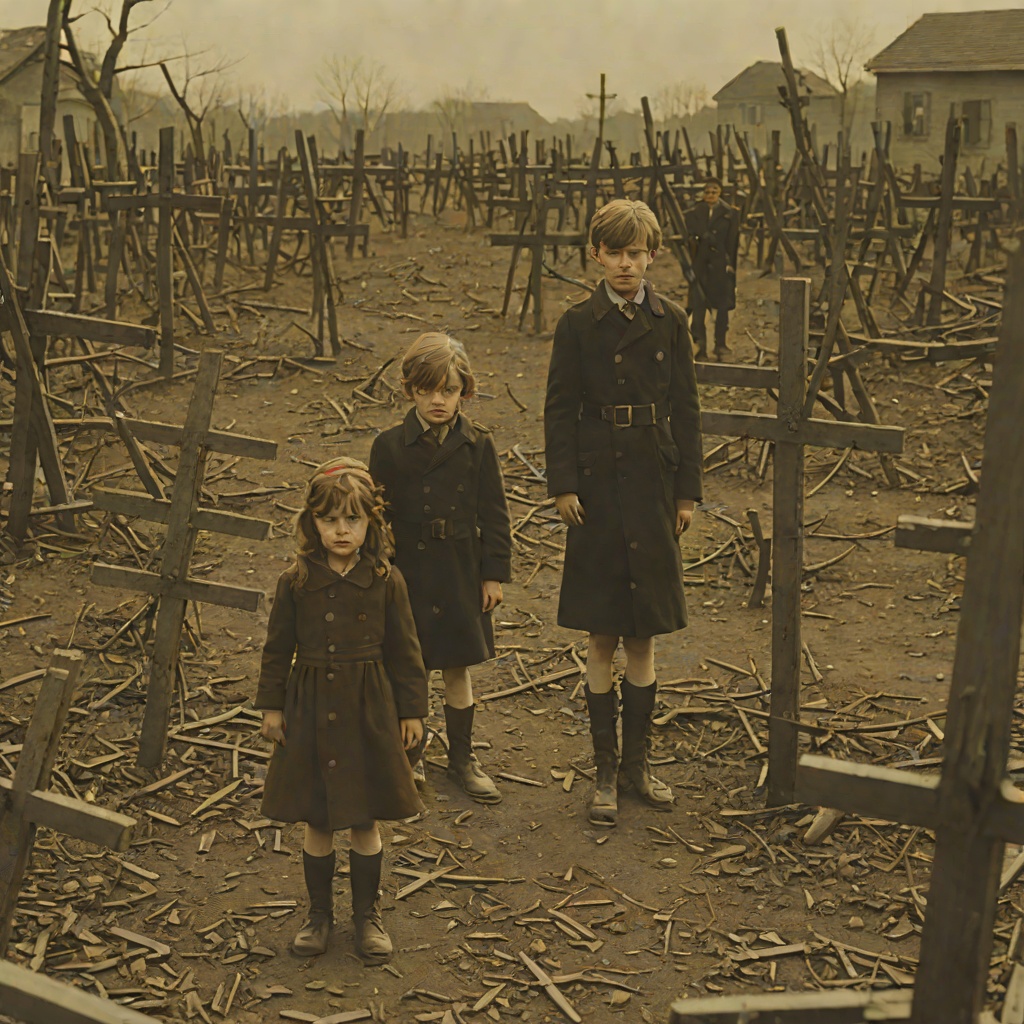
The boys were taken from their mothers’ laps and carried to distant villages where relatives could not find them. No two were kept together, and false names cut them off from their original identities. A captured child might be handed to a brutal peasant who treated him as a slave and kept him with pigs before the authorities transferred him to priests. The system thus dismantled family, community, name, and memory in sequence, making religious conversion part of a larger process of social erasure.
The priests used both inducement and punishment. The children were promised better food, fine clothes, freedom from labor, advancement, and even the possibility of becoming generals or nobles. When such offers failed, they were flogged, starved, terrified, imprisoned, and subjected to increasingly severe tortures. Yet the boys continued to pray secretly in Hebrew. One survivor might remember only the Shema after years of separation, but that fragment was enough in Antin’s telling to preserve a Jewish allegiance that the authorities had tried to destroy.
Antin recounts an especially terrible case known to her father. A gifted boy resisted every attempt to convert him. After bribes and torture failed, a priest baptized him while he slept from exhaustion. On waking, the boy was told that he was a Christian and was forced toward a crucifix. He rejected the imposed identity, threw the crucifix away, and spent the rest of his life moving between prison and hospital while continuing to say Hebrew prayers. The incident exposes the system’s claim to conversion as fraudulent: baptism could be performed upon an unconscious body, but it could not command the person’s faith.
Military Service and Its Afterlife
For those who survived the earlier ordeal without baptism, military service lasted until the age of forty. The men returned as broken adults, often without homes or any reliable clue to their origins. Some wandered among Jewish settlements, searching for their families; others begged from door to door while hiding torture scars beneath rags. Those who had yielded to baptism for temporary relief remained under ecclesiastical control even when they later insisted that they were still Jews. Practicing Jewish rites could bring the severest punishment.
The later conscription system was less openly abductive but still threatened Jewish religious continuity. A Jewish soldier could be forced to eat trefah, work on Sabbath, shave his beard, show reverence toward Christian objects, and endure mockery when he attempted private prayer. He might devise tricks to preserve fragments of observance, but four years of compelled violation left a lasting stigma. Military service could therefore make a man return home legally discharged yet spiritually marked by a life imposed upon him as though he had lived as a Gentile.
Service also destroyed household stability. Most men of twenty-one, the age of conscription, were already married and had children. Their absence damaged families and ruined businesses, and dismissal could send them home as beggars. A discharged soldier’s uniform might be stripped away and replaced with a shabby one; he received only a free return ticket and a few kopecks a day. He was hurried back into the Pale like an escaped prisoner, and if found outside it after the permitted period, he could be seized and returned in chains.
Memory, Fear, and Religious Identity
The stories of the Cantonists shaped Antin’s childhood fear of the surrounding Christian world. When a procession passed through Polotzk with soldiers, police, crosses, priests, and a mob, a nurse explained that the forces were present in case of a pogrom. Antin imagined not only murder by axes, knives, and ropes, but baptism as a fate worse than torture. Forced to kneel before Christian images or kiss the cross, a Jewish child would, in her imagination, lose the One God and be separated from the people whose history and prayers defined her.
The children’s resistance gave the community a narrative of painful pride. The Cantonists suffered isolation, hunger, flogging, and institutional power, yet their refusal to accept baptism demonstrated that identity could survive even after family memory had been nearly erased. Their remembered prayers transformed religious practice from a routine obligation into an act of defiance. In this sense, the Cantonist stories taught Antin that Jewishness was not merely a legal category imposed by the Czar; it was also a loyalty that the state could punish but could not wholly manufacture or extinguish.
Contrast with America and Narrative Significance
The Cantonists help explain the force of Antin’s later American ideal. Her father, Joseph Antin, applied for naturalization soon after landing in America and regarded citizenship as freedom to speak his thoughts and escape political and religious tyranny. In the United States, Antin understood the Constitution as protecting a Fellow Citizen’s right to choose a religious position, and a public courtroom as a place where accused and accuser could be treated equally. These experiences do not erase the violence and hierarchy present in American life, but they establish the legal and civic contrast through which the Russian past is judged.
The Cantonists also illuminate the book’s wider account of liberation. In Polotzk, the state confined Jews geographically, taxed them unequally, pursued families for military obligations, and used military and religious institutions to discipline Jewish bodies. In America, free public education, naturalization, courts, and public institutions offered Antin routes toward intellectual and civic participation. Her eventual movement from immigrant poverty through school and college is presented against the memory of children who were denied family, education, language, and choice. The Cantonists therefore function as a historical warning within the memoir: they show the terminal form of a world from which emigration promised escape, and they make the later language of freedom carry the weight of lives that could not escape at all.